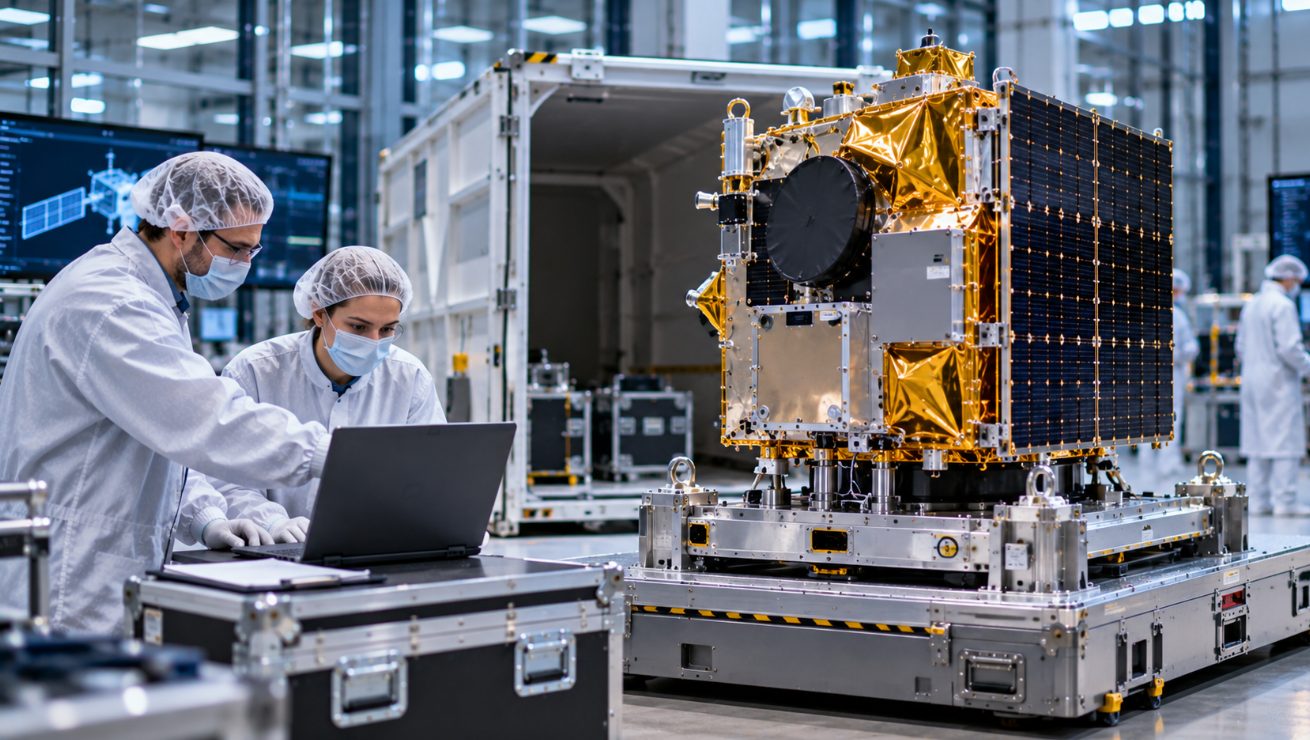
- Plan backwards from the launch provider's arrival windows and site rules.
- List every item that travels, not just the spacecraft.
- Decide the customs procedure per item: definitive import, temporary admission or carnet.
- Dangerous goods approvals and charter capacity have the longest lead times.
- Plan the return shipment together with the outbound move.
Timeline and site requirements
Start with the launch provider's campaign plan and the spaceport's requirements, and confirm them in writing.
- Arrival windows When may the spacecraft, the GSE and the campaign material arrive, and in which order?
- Site access Which documents, inductions and permissions are needed for deliveries and people?
- Delivery hours and handling Who unloads, with which equipment, and where are containers stored?
- Cleanroom rules Which items may enter which areas, and what has to be cleaned or bagged beforehand?
Inventory of everything that travels
Create one list of all items, with dimensions, weights, values, export status and dangerous goods status. Typical categories:
- Spacecraft In its transport container, with loggers and handling instructions.
- Mechanical GSE Lifting devices, transport adapters, rotation stands.
- Electrical GSE Check-out racks, power supplies, cables and computers.
- Fluids and pressurisation equipment Fuelling and pressurisation carts, often with dangerous goods aspects.
- Campaign material Tools, consumables, spares, office and IT equipment.
Customs and export
Decide the customs procedure for each item before departure. Items that stay at the launch site, such as the spacecraft itself, follow different rules than GSE that returns home.
- Export licences Confirm that licences cover the destination, the end user and all items.
- Temporary admission Prepare temporary admission or ATA Carnets for equipment that returns.
- Import documents Brief the local customs broker early with complete, consistent documents.
- Duties and taxes Clarify in advance who pays what, and how deposits for temporary admission are handled.
Dangerous goods
Identify every dangerous good in the campaign: batteries, pressurised systems, pyrotechnic devices, calibration gases, cleaning agents. Confirm classifications, packaging and any approvals, and check that each leg of the route accepts them. See our article on shipping COPVs and pressure vessels for a typical example.
Transport plan and contingencies
Group the items into shipments by priority and arrival window, and choose the mode for each. For the spacecraft, plan the route, the aircraft or vehicle, the handovers and the monitoring in detail. For critical items, define a backup: an alternative flight, a spare that can follow by courier, or a buffer day before the arrival window.
Return shipments
After the launch, the GSE and equipment go home. Plan the return when you plan the outbound move: the customs procedure must allow a duty-free re-import, temporary admission must be closed correctly, and transport capacity from remote sites is not always available on short notice. Our launch campaign logistics service covers both directions.