Dangerous goods shipping for COPVs, batteries and pyrotechnics
Pressurised tanks, flight batteries and pyrotechnic separation devices are everyday hardware in the space industry and regulated dangerous goods in transport. We prepare classification, packaging and documents with your team and with carriers who accept these goods.
- Regulations
- IATA DGR (air), IMDG Code (sea), ADR (road)
- Typical goods
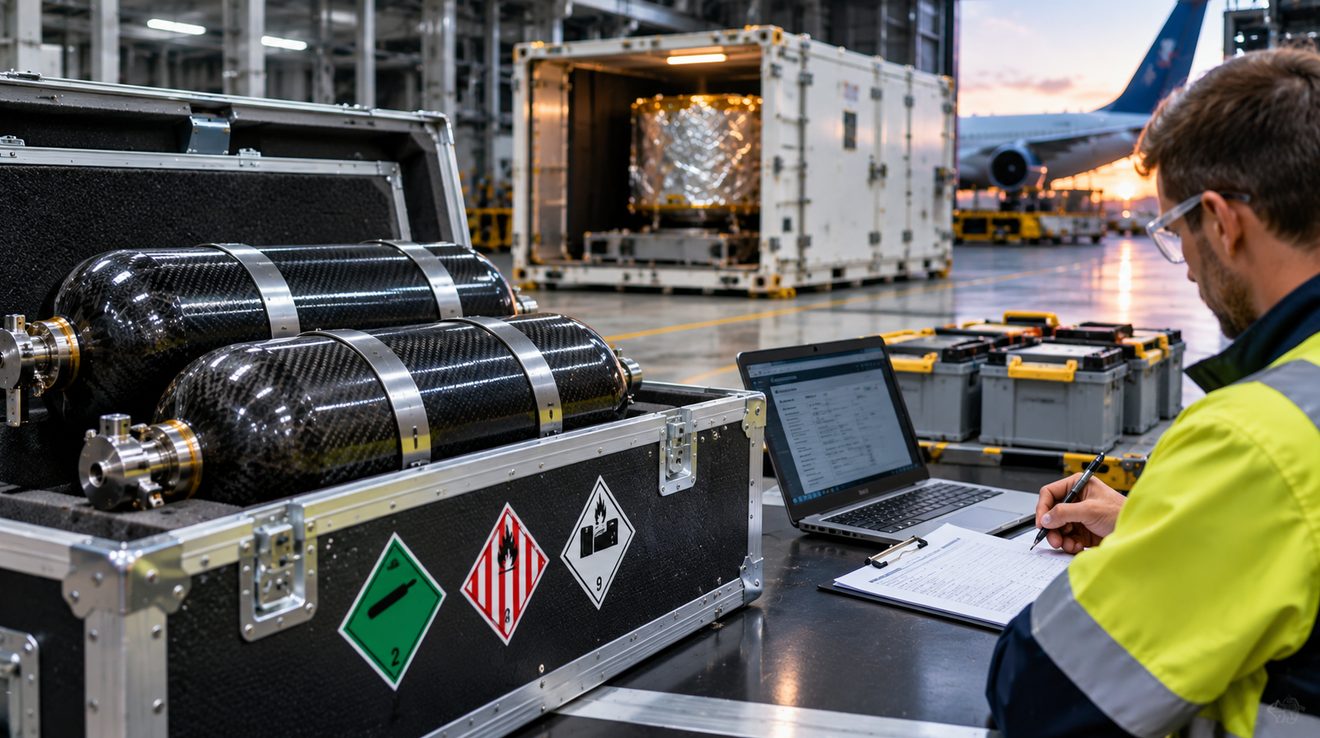
- COPVs and pressure vessels, lithium batteries, pyrotechnic devices
- Preparation
- Classification support, packaging, marking, labelling, declarations
- Approvals
- Coordination of special approvals where required
- Carriers
- Selection of carriers and routes that accept the goods
- Responsibility
- Shipper declarations signed by trained, authorised persons
- COPVs and composite tanks
- Pressure vessels and gas bottles
- Lithium-ion flight batteries
- Battery test units
- Pyrotechnic separation devices
- Initiators and cutters
- Propellant loading equipment
- Calibration gases
Flight hardware rarely fits standard dangerous goods rules
Dangerous goods regulations were written for commercial products in standard packaging. Space hardware is different: a composite overwrapped pressure vessel (COPV) built for a satellite may not carry the approvals that transport rules expect of a gas cylinder, a flight battery may be a prototype that has not completed the standard UN tests, and a pyrotechnic cutter may need a specific classification before any carrier accepts it.
These cases are solvable, but they need time and the right sequence: technical data from your engineers, a classification that holds up, packaging that meets the requirements, and sometimes an approval from a competent authority. We start this work early and keep everyone aligned.
What we see most often
The classification always depends on the specific item and its condition during transport. The overview below shows the usual starting points.
- COPVs and pressure vessels Transported pressurised, they are usually Class 2 gases, for example nitrogen or helium. Venting to a low pressure or shipping empty can change the classification, depending on the vessel and the content.
- Lithium batteries Class 9, as UN3480 when shipped alone or UN3481 when packed with or contained in equipment. Air transport limits the state of charge for batteries shipped alone, and prototypes may need special approval.
- Pyrotechnic devices Initiators, cutters and separation devices are Class 1 explosives. Many are classified in division 1.4, which affects which aircraft and routes are possible.
- Propellant-related items Equipment that has been in contact with propellants must be cleaned and certified, or shipped as dangerous goods according to its residues.
Preparation, carriers and documents
The shipper is responsible for correct classification and declaration, and declarations must be signed by trained persons. We support your team through the process, prepare the paperwork with you, check packaging and marking, and choose carriers and routes that accept the goods. For air shipments, we take into account the difference between passenger and cargo aircraft, which matters for many space-related dangerous goods.
If a special approval is required, we help you identify the competent authority, the information they need and a realistic lead time, so that the approval is not the reason the hardware misses its date.
How the process runs
- 01/05Technical data
We collect safety data, pressure, content, battery test summaries and classification reports from your engineering team.
- 02/05Classification
Together with your team, we confirm the UN number, class, packing requirements and any special provisions.
- 03/05Approvals and carriers
We check whether approvals are needed and select carriers and routes that accept the goods.
- 04/05Packaging and documents
Packaging, marking, labelling and the shipper's declaration are prepared and checked.
- 05/05Transport
The shipment moves with the correct documents and the carriers informed in advance.
Related services and guides
Dangerous Goods & COPV Shipping: FAQ
Your question is not here? Write to ops@zl-space.com. A specialist answers, not a ticket system.
How are COPVs shipped?
A COPV filled with gas is normally shipped as a Class 2 dangerous good. Depending on the gas, the pressure and the approvals of the vessel, it may be shipped pressurised, vented to a low pressure or empty. Flight COPVs often lack the approvals expected for transport pressure receptacles, so special approvals can be needed. The decision is made per vessel with the technical data from the manufacturer.
Can lithium flight batteries be shipped by air?
Yes, under the IATA Dangerous Goods Regulations, as UN3480 or UN3481 in Class 9. Batteries shipped alone generally have to be at a reduced state of charge and are often restricted to cargo aircraft. Prototype and low-production batteries that have not passed the UN tests usually need an approval from the competent authority.
Are pyrotechnic separation devices allowed on aircraft?
Many pyrotechnic devices are classified as Class 1 explosives, often division 1.4. Some can be carried on cargo aircraft under the regulations, others only by road or sea. The classification of the specific device decides what is possible.
Who signs the dangerous goods declaration?
The shipper is responsible for the declaration, and it must be signed by a person trained for the respective mode of transport. We support your team with the preparation and checks.
Plan your next mission-critical shipment with a dedicated space logistics team
Tell us about the hardware, the route, the customs and export situation and the date it has to be there. Sensitive programme details can follow under NDA.