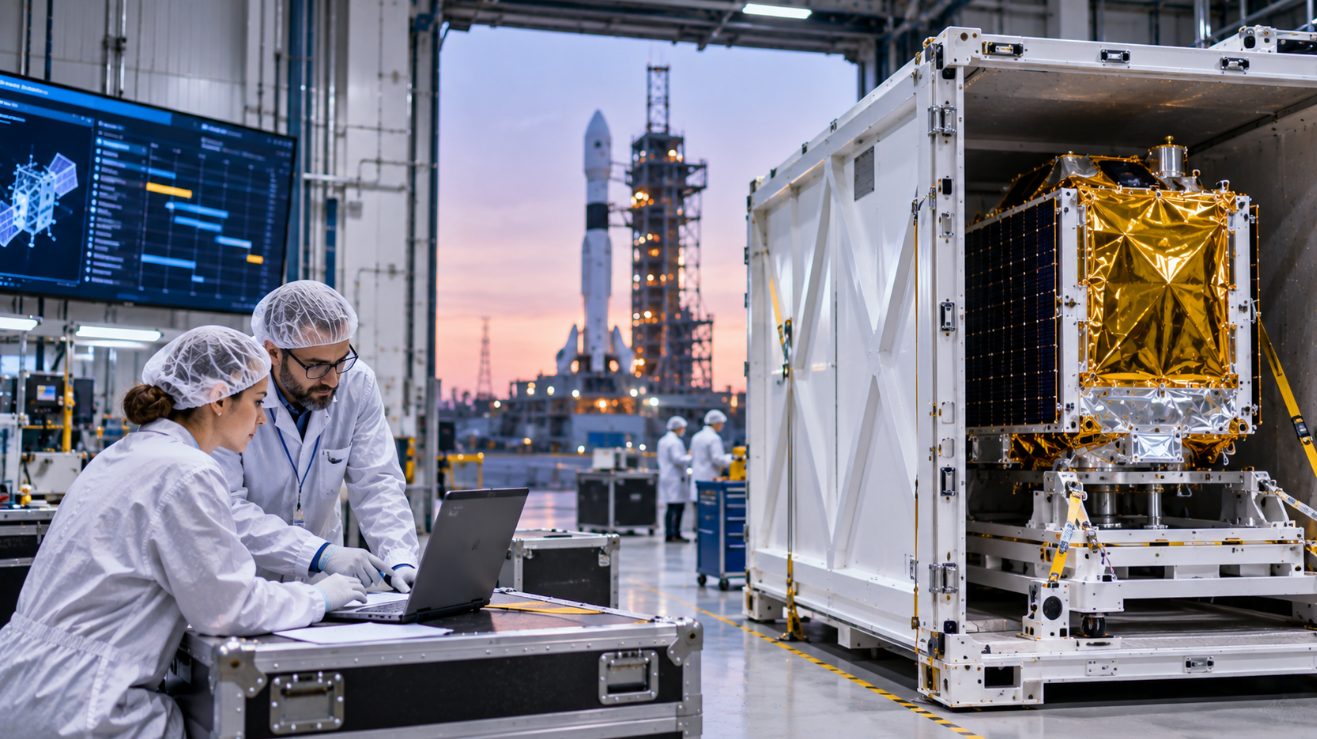
- Space logistics covers the terrestrial movement of hardware, equipment and material for space missions, from supplier pickup to launch site delivery.
- It differs from general freight forwarding because transport is planned around handling limits, export control, dangerous goods and fixed programme milestones.
- Most delays happen at interfaces between parties, not during the transport itself.
- A single, accountable logistics lead reduces risk more than any individual carrier choice.
A working definition
In the space industry, the term space logistics is used in two ways. In research, it often refers to the movement of supplies in orbit or to the Moon. In day-to-day industry practice, it means something more immediate: getting space hardware from where it is made to where it is tested, integrated and launched.
This second meaning is the one that affects every satellite manufacturer, launch company and supplier today. It includes the transport of components and subsystems, the movement of complete spacecraft, the logistics of test and launch campaigns, and the customs, export control and dangerous goods work that comes with them.
What space logistics covers
A typical space programme generates many different movements over its lifetime. They differ in size, sensitivity and urgency, but they all have to fit the same programme plan.
- Supplier logistics Components and subsystems from suppliers to the integrator, often from several countries.
- Test campaign logistics Hardware and equipment moved to environmental test facilities and back, timed around test slots.
- Spacecraft transport The finished satellite in its container, moved under controlled conditions to the launch site.
- Launch campaign logistics Ground support equipment and campaign material delivered to the launch site in the right sequence.
- Return logistics Equipment returning after a campaign, units returning for repair, and recovered hardware.
How it differs from standard freight forwarding
General freight forwarding is built for scale: standard packaging, standard procedures and price-driven decisions. That works well for most cargo. Space hardware breaks those assumptions in several ways at once.
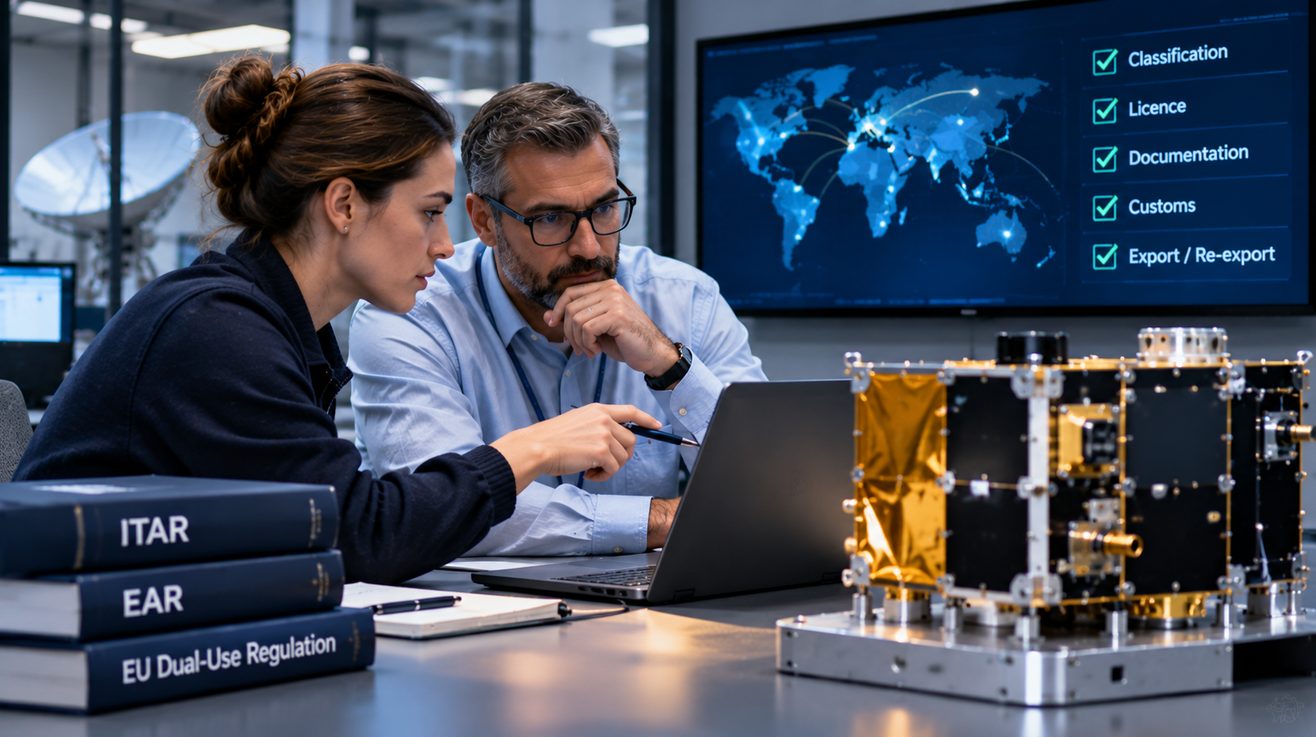
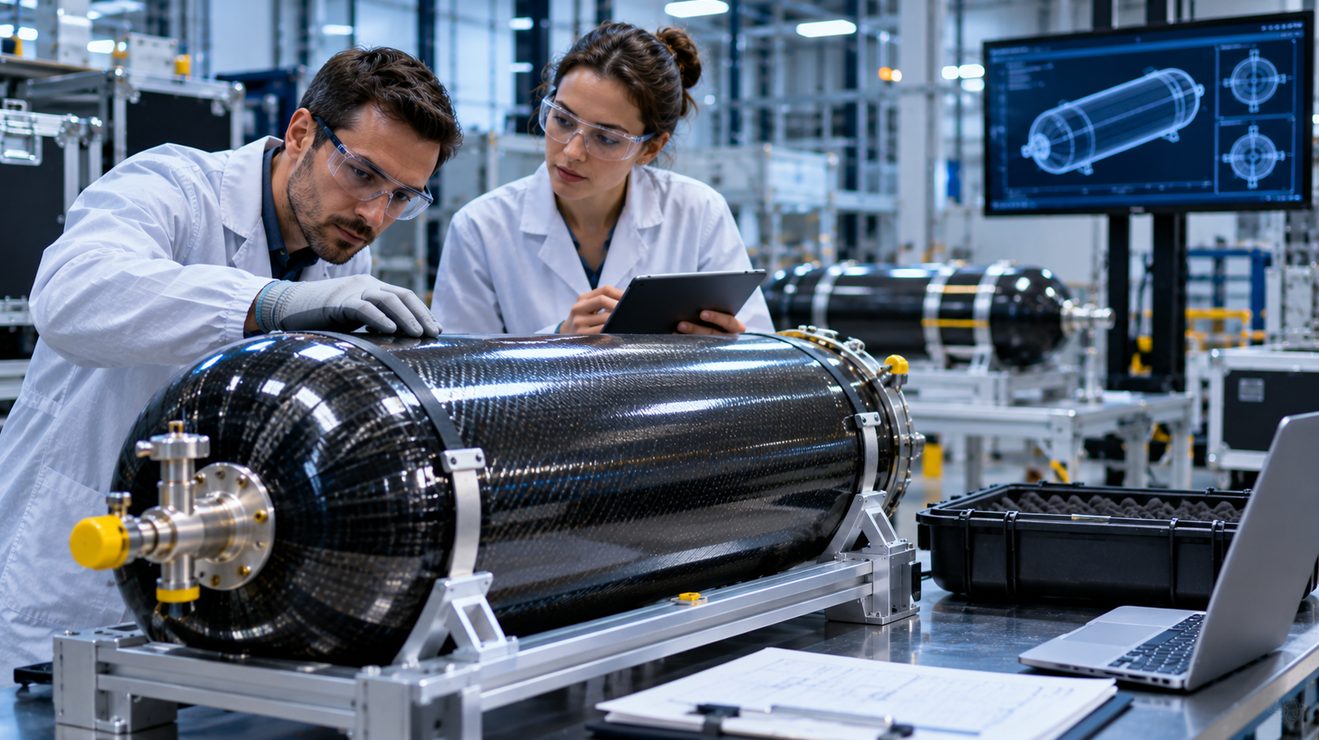
First, the hardware has handling limits defined by engineers: shock, vibration, temperature, humidity and cleanliness. Second, much of it is export controlled, so documents must match licences and only authorised parties may receive technical data. Third, a large share of space hardware is classified as dangerous goods, from pressure vessels to lithium batteries and pyrotechnic devices. Fourth, every shipment serves a fixed milestone: a test slot, an integration step or a launch window that does not move because a truck was late.
A forwarder that does not know these constraints can still move the cargo, but the risk sits with the programme. Space logistics means planning around them from the start.
Where shipments really go wrong
When space shipments are delayed, the cause is rarely the aircraft or the truck. It is usually an interface: a commercial invoice that does not match the export licence, a battery nobody declared, a customs broker at the destination who receives the documents on the day of arrival, or a handover where nobody was sure who was responsible.
That is why good space logistics focuses on preparation and accountability. Collect the shipment data once, align every document with it, brief every party in advance, and keep one person responsible for the whole chain. Our article on how to ship a satellite shows what that looks like in practice.
Who needs space logistics
Every organisation that builds, tests or launches space hardware: launch service providers, satellite manufacturers, subsystem suppliers, NewSpace companies and research institutes. The needs differ, but the underlying discipline is the same: move sensitive, regulated hardware reliably to a fixed date.
Looking further ahead
As space activities grow, logistics will extend beyond launch: return flows of reusable hardware and samples, servicing missions, and eventually supply chains to orbital and lunar infrastructure. These are emerging fields. Today, the decisive work still happens on Earth, between the factory, the test centre and the launch pad. You can read more about this outlook on our page about future space logistics.