Return and recovery logistics for space hardware
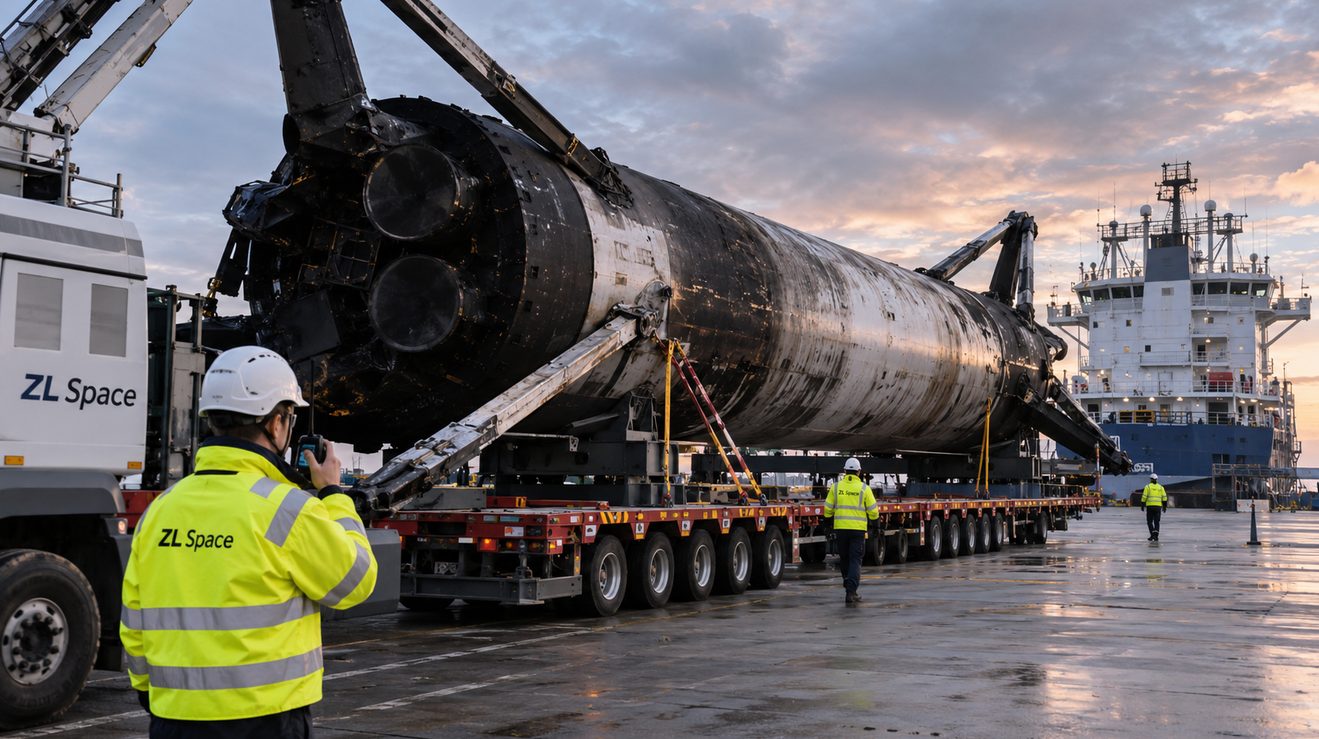
Reusable launch vehicles, return capsules, sample return missions and recovered test articles create logistics in the opposite direction: from a landing zone, a ship or a remote recovery site back to the factory, the refurbishment hall or the laboratory. We plan these return flows with the same care as the outbound journey.
- Typical cargo
- Recovered stages and boosters, capsules, test articles, returned samples, recovered payloads
- From
- Landing zones, recovery ships and ports, remote recovery sites, test ranges
- To
- Factories, refurbishment facilities, laboratories, test centres
- Key issues
- Residual hazards, oversized loads, re-import, integrity of samples
- Evidence
- Condition reports, monitoring and documented chain of custody
- Planning
- Return logistics prepared before the flight, not after landing
- Recovered first stages
- Reusable boosters
- Return capsules
- Heat shields
- Recovered test articles
- Sounding rocket payloads
- Returned samples
- Recovery equipment
What comes back has to be moved too
Reusability is changing the space industry. Boosters land and fly again, capsules return with experiments, test flights end with a recovery at sea or on land. Every one of these returns starts a logistics chain that is at least as demanding as the outbound one: the hardware may be large, hot, wet or carrying hazardous residues, the recovery site may be remote, and the team needs the hardware back quickly to inspect, refurbish or analyse it.
Return logistics is often planned late, after the launch campaign is already under way. We recommend the opposite: plan the return when you plan the flight.
From the recovery site to the next step
We organise the terrestrial part of return and recovery flows and coordinate with your recovery team, the site operator and the receiving facility.
- Recovered stages and boosters Oversized road transport, port handling and sea legs from landing zones and recovery ships to refurbishment.
- Return capsules and test articles Transport from recovery sites to integration halls or test centres, with monitoring where required.
- Residual hazards Coordination of safing, cleaning certificates or dangerous goods shipment for propellant residues, pyrotechnics and batteries.
- Customs and re-import The right procedure when hardware lands or is recovered in another country, so that it can return without unnecessary duties.
- Returned samples Transport with documented chain of custody and the environmental conditions defined by the mission.
Chain of custody for returned samples
When samples or experiments return from space, their scientific value depends on what happens next. Temperature limits, contamination control, packaging and an unbroken record of every handover matter as much as speed. We plan these transports with the mission team, document each step and hand over the records together with the samples.
Prepared before the flight
A return flow needs decisions that are hard to make after landing: which transport is available at the recovery site, which permits are needed for oversized loads, how residual hazards are handled, which customs procedure applies and who receives the hardware. We prepare these points in advance, so that the hardware starts its way home as soon as it is safe to move.
How the process runs
- 01/05Return concept
We define what comes back, from where, to which facility and under which conditions.
- 02/05Hazards and permits
Residual hazards, oversized load permits and customs procedures are clarified before the flight.
- 03/05Recovery readiness
Transport, handling equipment and documents are on standby for the recovery window.
- 04/05Return transport
The hardware moves from the recovery site to its destination with condition reports at each handover.
- 05/05Handover and records
Delivery to the receiving facility with monitoring data and chain of custody records.
Related services and guides
Return & Recovery Logistics: FAQ
Your question is not here? Write to ops@zl-space.com. A specialist answers, not a ticket system.
What is return and recovery logistics in the space industry?
It is the transport of hardware that comes back from flight, such as recovered boosters, return capsules, test articles and returned samples, from the landing or recovery site to the factory, refurbishment facility or laboratory, including hazards, permits and customs.
How are recovered boosters transported?
Usually by oversized road transport, often combined with port handling and sea legs when the booster lands on a ship or near a port. Route surveys, permits and escorts are planned in advance.
What about residual propellants or pyrotechnics after landing?
Recovered hardware must be made safe or shipped according to its residual hazards. We coordinate safing and cleaning certificates with your team, or ship the hardware under the applicable dangerous goods rules.
Do recovered parts need customs clearance?
If hardware lands or is recovered in another country, it usually has to be re-imported. With the right export procedure before the flight, re-import can often take place without duties.
Can you transport returned samples?
Yes. We plan sample transports with the mission team, with the required environmental conditions and a documented chain of custody for every handover.
Plan your next mission-critical shipment with a dedicated space logistics team
Tell us about the hardware, the route, the customs and export situation and the date it has to be there. Sensitive programme details can follow under NDA.